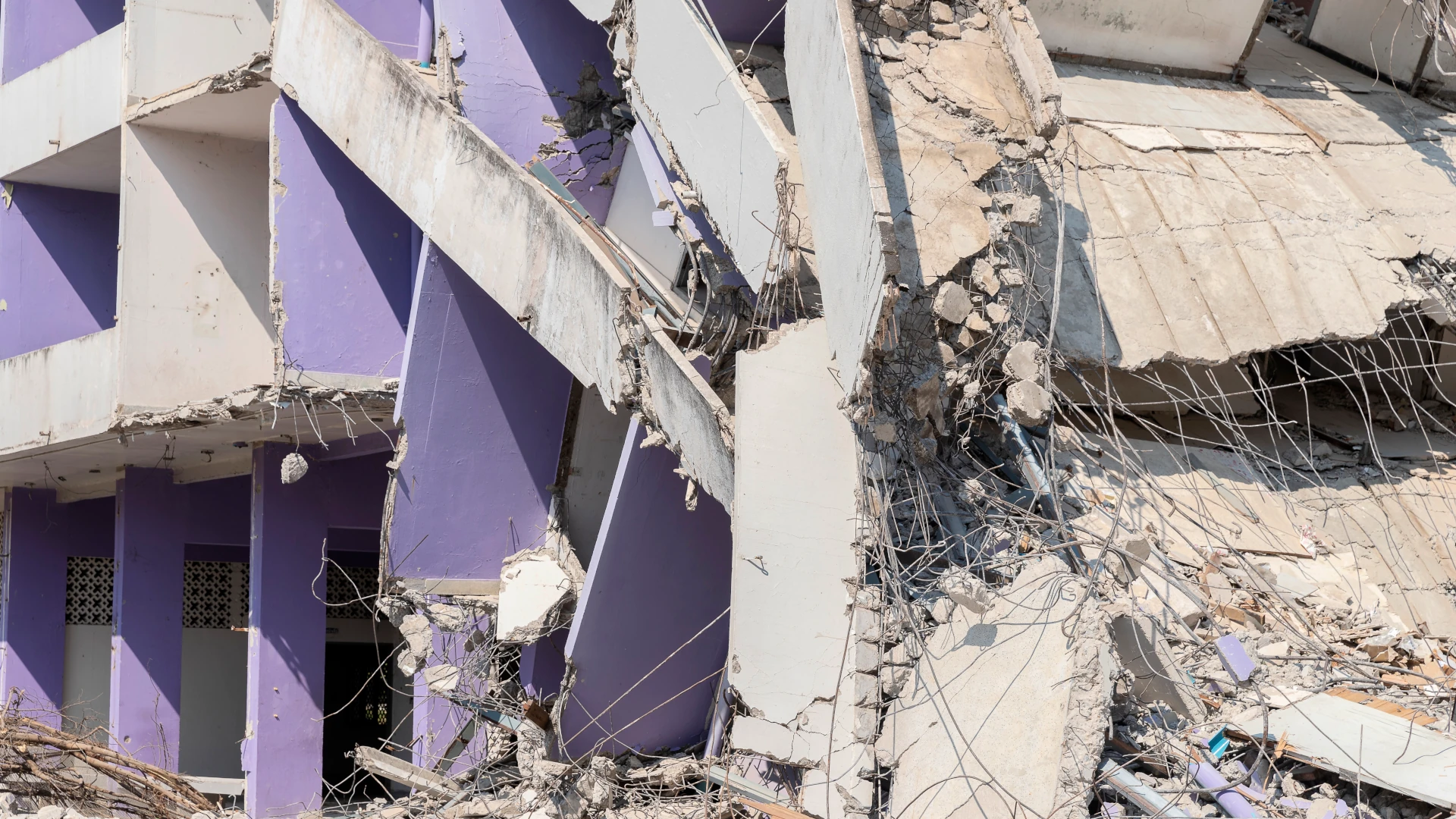
A powerful magnitude 7.4 earthquake struck western Colombia on Monday, August 10, 2026, causing severe damage and being felt across parts of Colombia, Ecuador, Panama, and Venezuela. The event has renewed concerns that the recent earthquakes in Colombia and Venezuela could be connected to a larger regional seismic pattern.
The evidence supports a more cautious conclusion: the region is seismically active, but there is no scientific basis for claiming that a larger earthquake is imminent or that the recent events form a predictable sequence across the entire region.
What happened in Colombia
The earthquake occurred at approximately 7:34 a.m. local time near San José del Palmar in the department of Chocó, in western Colombia. Reports from the U.S. Geological Survey and Colombian authorities placed the epicenter roughly 400 kilometers west of Bogotá, with the shaking felt in the capital and numerous other cities.apnews+1
The earthquake caused extensive damage in parts of western Colombia. Buildings collapsed, people were trapped, and emergency teams began search-and-rescue operations. Because the situation remains active, casualty and damage figures have changed as authorities continue assessments.
The tremor was also felt in neighboring Ecuador, Panama, and Venezuela. This does not necessarily mean that those countries experienced separate earthquakes. A strong earthquake can produce seismic waves that travel over a wide area, allowing people far from the epicenter to feel the movement.apnews+1
Reports also indicate that the Colombian earthquake was followed by multiple smaller earthquakes, known as aftershocks. The Colombian Geological Service recorded 21 aftershocks within the first period after the main event, while later reports indicated that the number had increased substantially as monitoring continued.reuters+1
What about the earlier Venezuela earthquakes?
On June 24, 2026, Colombia’s National Seismological Network recorded a magnitude 7.0 earthquake with an epicenter in Venezuela. The event occurred at a relatively shallow depth, and people in several areas reported feeling the shaking.www2.sgc.gov
The U.S. Geological Survey also recorded a magnitude 7.2 earthquake near San Felipe, Venezuela, on the same date. These events affected a region that includes active fault systems associated with the interaction of the Caribbean and South American tectonic plates.earthquake.usgs
The fact that significant earthquakes occurred in Venezuela in June and Colombia in August has led some observers to suggest that the events are part of one larger sequence. However, proximity in time does not prove that one earthquake caused the other.
Earthquakes occur because stress accumulates and is released along faults. A large earthquake can alter stress in nearby areas, but determining whether that change is enough to trigger another significant earthquake requires detailed geological and seismic analysis. It is not responsible to assume that every earthquake in the region is directly linked.
Could more earthquakes occur?
Yes, additional tremors are possible—especially near the Colombian earthquake’s rupture zone. These smaller events are called aftershocks and are a normal part of how the Earth adjusts after a major earthquake.
Aftershocks are generally more frequent immediately after the main event and tend to decrease over time. However, they can continue for days, weeks, months, or longer. They may also affect buildings that were already weakened by the main earthquake.earthquake.usgs+1
The Colombian Geological Service has warned that additional tremors may occur, but it has also emphasized that scientists cannot determine the exact time, location, or magnitude of the next earthquake.reuters+1
That distinction is essential. Scientists can estimate probabilities and monitor seismic activity, but they cannot provide reliable predictions such as “another major earthquake will occur tonight” or “a specific city will be hit next.”
Is this part of something bigger?
Colombia, Venezuela, Ecuador, and Panama are located in a region with several active tectonic structures. The interaction of the Caribbean, South American, Nazca, and other tectonic plates contributes to earthquake risk across northern South America and the Caribbean region.yahoo
This geological reality explains why earthquakes are not unusual in the area. It does not, however, establish that the recent events are the beginning of a continent-wide earthquake sequence.
Research on earthquake triggering shows that large earthquakes can sometimes produce temporary changes in seismic activity at distant locations. Nevertheless, most aftershocks occur near the original earthquake, and evidence that one major earthquake reliably triggers another large earthquake far away is limited.pubs.usgs
The scientifically supported message is therefore one of elevated awareness, not prediction. Communities near the Colombian epicenter should remain prepared for aftershocks, but residents in other countries should not interpret every felt tremor or online warning as evidence that a larger disaster is approaching.
What residents should do
People in affected areas should follow instructions from the Servicio Geológico Colombiano, the Unidad Nacional para la Gestión del Riesgo de Desastres, local authorities, and emergency services.
Practical steps include:
-
Stay away from visibly damaged buildings.
-
Expect additional shaking and avoid re-entering unsafe structures.
-
Check on family members, neighbors, and vulnerable people.
-
Keep emergency supplies, water, medicines, identification, and a flashlight accessible.
-
Secure heavy objects that could fall during another tremor.
-
Use official channels rather than forwarding unverified social-media messages.
-
Report emergencies through local authorities.
The recent earthquakes in Colombia and Venezuela demonstrate that the region faces a real and continuing seismic hazard. They do not prove that a larger earthquake is coming or that the entire continent is entering a predictable seismic cycle.
